
The Life Story of David Duong The Man Behind The King of Trash
David Duong is known today as a leader in recycling and environmental services, the founder of California Waste Solutions in the United States and Vietnam Waste Solutions in Ho Chi Minh City, and the man whose life inspired The King of Trash. But the story behind that name is far greater than business. It is the story of a Vietnamese refugee family torn from everything they had built, forced onto the open sea, and driven by a single instinct that would define the rest of their lives: survive.

When Saigon fell in April 1975, it was not simply the end of a war. For millions of South Vietnamese families, it was the collapse of a world. The Vietnam War had already left deep scars across the country, but in its final days, fear moved faster than history. Streets filled with panic. Families gathered what little they could carry. Some ran toward embassies. Others ran toward boats. Behind them, a homeland was breaking apart. Ahead of them, there was no certainty, only the desperate hope that somewhere beyond the horizon, life might still be possible.

For the Duong family, that hope came at a devastating cost. David’s father, Duong Tai Thu, had built one of South Vietnam’s largest paper and recycling businesses. He had built a life through work, discipline, and vision. Then, almost overnight, the factory was seized, the trucks were taken, and the family home was lost. What had taken years to build disappeared in days. They did not leave Vietnam in pursuit of opportunity. They left because staying meant losing not only their future, but their freedom.
Like so many Vietnamese boat people, they escaped by sea. It was not a journey of adventure, but a crossing shaped by fear, hunger, silence, and the constant presence of death. Small boats pushed into open water with no guarantee they would ever reach land. Many never did. The ocean became a grave for countless families who vanished without ceremony and without farewell. David Duong and his family were among the ones who survived. They survived storms, uncertainty, and the unbearable weight of not knowing whether they would live to see another dawn. That experience never left him. It became the first chapter of a life that would later be defined by endurance, responsibility, and the refusal to let hardship have the final word.

After months in a refugee camp, the family was accepted into the United States and arrived in San Francisco with no money, no English, and no roadmap for what came next. America offered them freedom, but not ease. They lived packed into a small apartment with relatives in the Tenderloin. At night, they walked the streets collecting bottles, cardboard, and recyclables, gathering whatever they could sell to survive another day. It was difficult, humbling work. It was the kind of labor most people never notice unless they are forced to see it. But within that hardship, David Duong learned one of the most important lessons of his life: there is honor in every kind of honest work.

That lesson became the foundation of everything he would later build.
David Duong did not rise by escaping difficult work. He rose by understanding its value. He saw dignity where others saw only struggle. He saw possibility where others saw only what had been discarded. Long before sustainability became a language of policy, branding, or public image, he understood it in the most human way possible. He understood that what people throw away still carries value. He understood that labor at the margins still holds dignity. And he understood that rebuilding a life often begins in the places others are too proud to stand.

In 1983, the Duong family took their first real step toward stability by pooling their savings to form Cogido Paper Corporation, a small recycling and export business. It was modest, but it was theirs. It was proof that survival could become structure, and that structure could become opportunity. In 1989, they sold the company, giving the family both capital and confidence. A few years later, in 1992, David Duong founded California Waste Solutions. What began with a small fleet and a clear vision grew into one of the most respected family-owned environmental service companies in the country, serving hundreds of thousands of households across Oakland and San Jose.

Yet even that success tells only part of the story.
What makes David Duong remarkable is not simply that he built a company. It is that he built it in one of the least glamorous and most overlooked industries in public life. Waste management is essential to the functioning of every city, yet the people who do that work are rarely celebrated. Most people never think about who collects, sorts, and processes what they leave behind. David Duong did. He built an entire philosophy around it. He believed that the work others ignore is often the work that holds society together. He believed that dignity belongs not only to executives and public figures, but to every worker whose labor keeps a community clean, safe, and functioning.
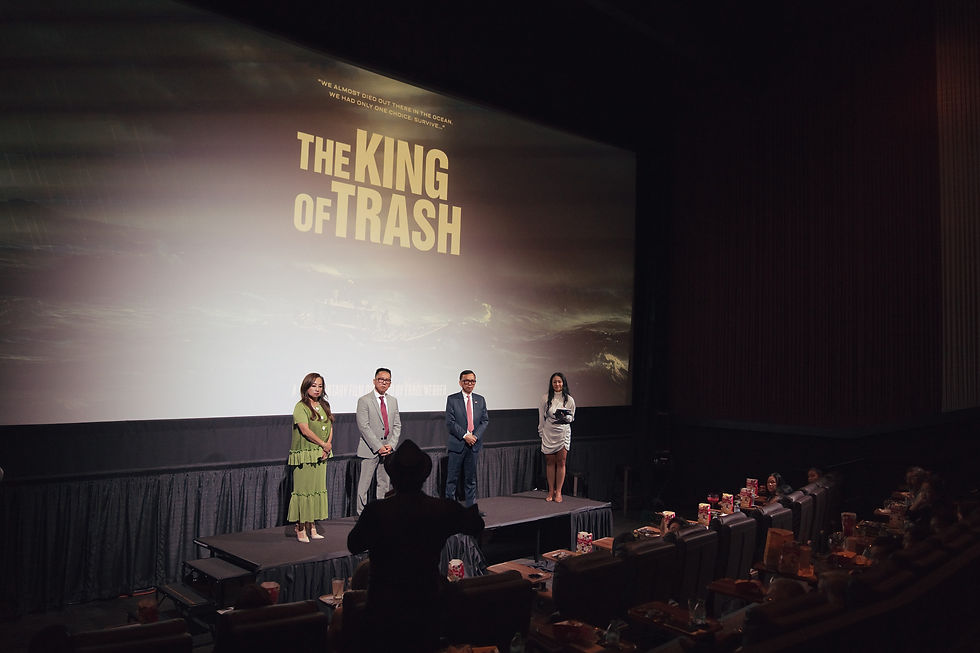
That is what gives the title The King of Trash its real meaning.
At first glance, it sounds bold, almost improbable. But the deeper truth is that David Duong did not become known by that name because of spectacle. He earned it because he understood transformation. He understood how to find value where others saw none. He understood how to build something lasting from what the world had cast aside. In that sense, the title is not really about trash. It is about vision. It is about a man who learned, through war and exile, that what appears broken can still be rebuilt, and what appears worthless can still hold tremendous value.

His journey became even more profound when it brought him back to Vietnam.
Decades after fleeing the country as a refugee, David Duong returned not as a man trying to reclaim the past, but as a builder helping shape the future. Through Vietnam Waste Solutions, he brought modern environmental infrastructure and long-term sustainability thinking back to the country his family had once been forced to leave behind. There is something deeply moving in that return. History had taken so much from him and his family, yet he chose not to answer history with bitterness. He answered it with contribution. He returned with experience, investment, and a desire to build. In doing so, he transformed one of the most painful chapters of his life into one of its most meaningful acts of renewal.
That choice reveals something essential about who David Duong is.
He is not only an entrepreneur. He is not only a founder or chairman. He is a bridge between loss and rebuilding, between America and Vietnam, between business and service. His life is not just a success story. It is a human story. A story about a son shaped by his parents’ sacrifice. A story about a refugee who never forgot the cost of survival. A story about a man who turned labor into legacy and private success into public contribution.
This is also why The King of Trash resonates as more than a documentary title. It captures a life built not on image, but on substance. It captures a journey that moves from war to water, from exile to enterprise, from hardship to hope. It reflects the spirit of a man who did not simply recover from loss, but built something larger than the loss itself.

At its heart, David Duong’s story is about more than business, more than industry, and more than one man’s rise. It is about family. It is about memory. It is about resilience. It is about the quiet, relentless courage required to begin again when everything familiar has been taken away. It is about the kind of success that does not forget where it came from and does not exist only for itself.

David Duong is called The King of Trash, but his real legacy reaches far beyond that name. He is a survivor of history, a builder of institutions, and a man whose life reminds us that from the wreckage of war, from the humiliation of exile, and from the things the world throws away, something extraordinary can still rise.
That is who David Duong is.
And that is the story behind The King of Trash.


Comments